The tech companies build for hospitals and trickle down to us. The marketing agencies hire copywriters who don't know the difference between a Weil and a Lapidus. We got tired of it, so we started building our own.
First Ray Labs is AI-powered tools for podiatric surgery — built from inside the practice, by people who live the problems every day.
There are roughly 10,000 private podiatry practices in this country. Almost every one is dealing with the same thing.
$2,000–$10,000 a month for generic healthcare content written by 22-year-olds who don't know the difference between a cortisone injection for plantar fasciitis and why you'd never inject the Achilles. We're on our third website company. We've fired two agencies.
Every "healthcare AI" tool either doesn't work with your EHR, requires you to hand over patient data you're not comfortable sharing, or generates content that gets the medicine wrong. Generic AI is a liability in a clinical context.
Staying current with modern medicine is hard enough — your EHR shouldn't make everything else harder too. The tech companies build for hospital systems and trickle down to private practice. Nobody's building tools that work in our actual workflow.
Not a single vendor actually operates in the world they're building for. That's the gap. And that's why everything feels close-but-not-quite — because nobody at these companies has ever scrubbed in, dictated a note at 6 PM, or fought a denial for a plantar plate repair.
Every tool is tested in our own four-doctor practice first. If it doesn't survive a real clinical day, it doesn't ship.
Medically reviewed social media content and practice web design — every piece checked for clinical accuracy by a board-certified surgeon. Sounds like your practice, not like a marketing agency.
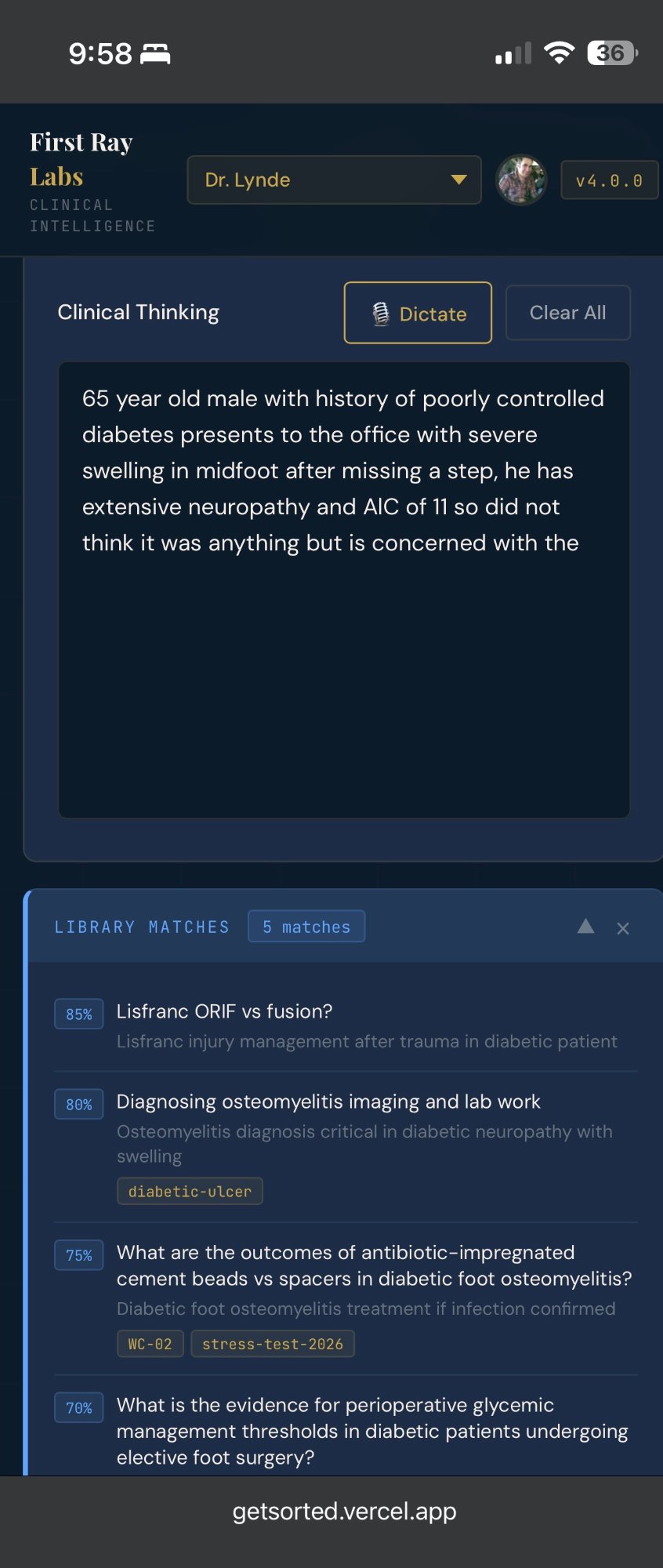
Clinical documentation in seconds. Generate audit-ready MDM paragraphs and Subjective sections from shorthand or free-text — paste straight into your EHR. Used every day in our own practice.
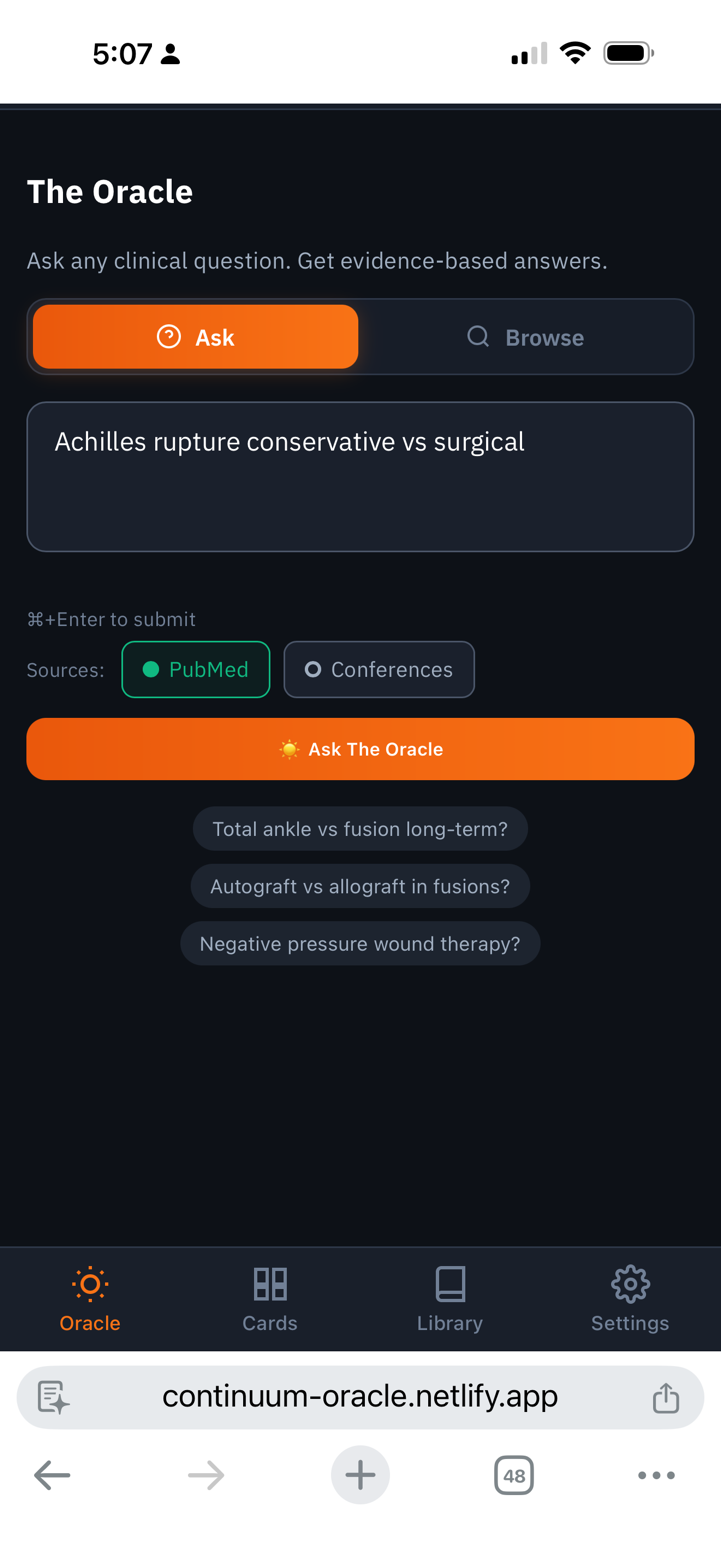
Clinical decision support that synthesizes PubMed evidence for surgical planning. Ask it a clinical question, get an evidence-based answer with sources — not a hallucination.
AI-generated ABFAS Part II scenarios with adaptive difficulty. Unlimited practice cases, performance analytics, and competency gap analysis. No more $500 question banks.
Every post reviewed for accuracy by a board-certified foot and ankle surgeon. Because we know you don't inject the Achilles tendon with cortisone — and your content shouldn't suggest otherwise.
Fully written content with Canva visual briefs, platform-optimized hashtags, and scheduling calendar. Ready to drop in and go.
Landing pages and web presence that sound like your practice — not a template filled in by someone who's never seen a surgical bay.
Every piece goes through multiple compliance checks — treatment accuracy, drug interactions, scope-of-practice, regulatory alignment — before it reaches you.
Your total time investment. Drop visuals into Canva using your branded templates, schedule through Meta Business Suite. We do the rest.
Medical marketing agencies charge thousands a month. And they still don't know the medicine.
The door opener. Clinical social media content and practice landing pages. Once a practice trusts us with how they look to patients, we become the go-to for everything else.
Continuum Oracle — ask a clinical question, get a literature-synthesized answer with real sources. Not a chatbot guessing. An evidence engine built by a surgeon who knows which studies actually matter.
Procedure-specific playbooks customized to each attending's preferences. Implant selection, OR setup, post-op protocols — the surgical cliff notes your residency program should have had. One platform, every surgeon's approach.
CBPS for ABFAS Part II prep, teaching case generation, grand rounds materials. Every resident who passes their boards with our tool enters practice as a future Continuum user.
Start with podiatry. Then orthopedic foot and ankle. Then broader. The compliance engine, the content pipeline, the clinical logic — all of it transfers to other specialties once we prove it works in ours.
We're not another AI company guessing at what surgeons need. We're surgeons who got tired of waiting for someone else to build the right tools. If your practice is dealing with any of this, let's talk.